How Wisconsin's Cost of Living Trends Affect Your Personal Loan Borrowing Power
MW
Margaret Wack
Personal Finance Writer · Updated October 2026

Margaret Wack
Personal Finance Writer · Updated October 2026
Imagine you are sitting at your kitchen table in Madison, looking over your monthly expenses for 2026. You have a stable job and a decent credit score, but as you look at the rising costs of groceries and heating oil, you realize that your 'disposable income' isn't what it used to be. This is more than just a personal feeling; it is a real economic phenomenon that directly impacts how much money lenders may be willing to lend you. In 2026, many Wisconsinites are finding that while their nominal income stays the same, their actual purchasing power has shifted due to localized inflation in housing and essential services.
Many borrowers mistakenly believe that as long as they meet a specific credit score threshold, their loan amount is guaranteed. However, lenders do not operate in a vacuum. They look at your Debt-to-Income (DTI) ratio through the lens of your actual ability to repay. If your cost of living has risen by 5% or 10% over the last year, that extra expense effectively lowers your 'buffer,' making you appear riskier to a potential lender. This article will help you understand how these economic shifts in Wisconsin might affect your loan application and what steps you can take to strengthen your profile before you apply.
Currently, personal loan interest rates for 2026 are seeing varied trends depending on the market; while some borrowers see APRs as low as 7.5%, others with less established credit histories may face rates closer to 35.9%. Furthermore, typical loan amounts for debt consolidation or home improvements often range from $5,000 to $50,000. Understanding how your local Wisconsin economy interacts with these numbers is the key to successful borrowing.
In 2026, one of the most significant factors affecting your borrowing power in Wisconsin is the volatility of the housing market. Whether you are renting an apartment in Milwaukee or paying a mortgage in Eau Claire, your housing cost is the largest piece of your financial puzzle. Lenders look at your monthly housing obligation as a primary component of your DTI ratio. When rent or property taxes increase, that percentage of your income dedicated to 'survival' grows, which can inadvertently shrink the amount you are eligible for in a personal loan.
Consider this scenario: A borrower has an income of $4,000 per month. In 2025, their rent was $1,200 (30% DTI). However, due to market shifts in 2026, their new rent is $1,500 (37.5% DTI). Even though their income hasn't changed, that 7.5% jump in housing cost significantly reduces the 'cushion' a lender sees when calculating whether you can handle an additional loan payment. This shift doesn't just affect your ability to get approved; it may also influence the interest rate offered, as higher DTI ratios often signal higher risk.
To navigate this, consider these steps:
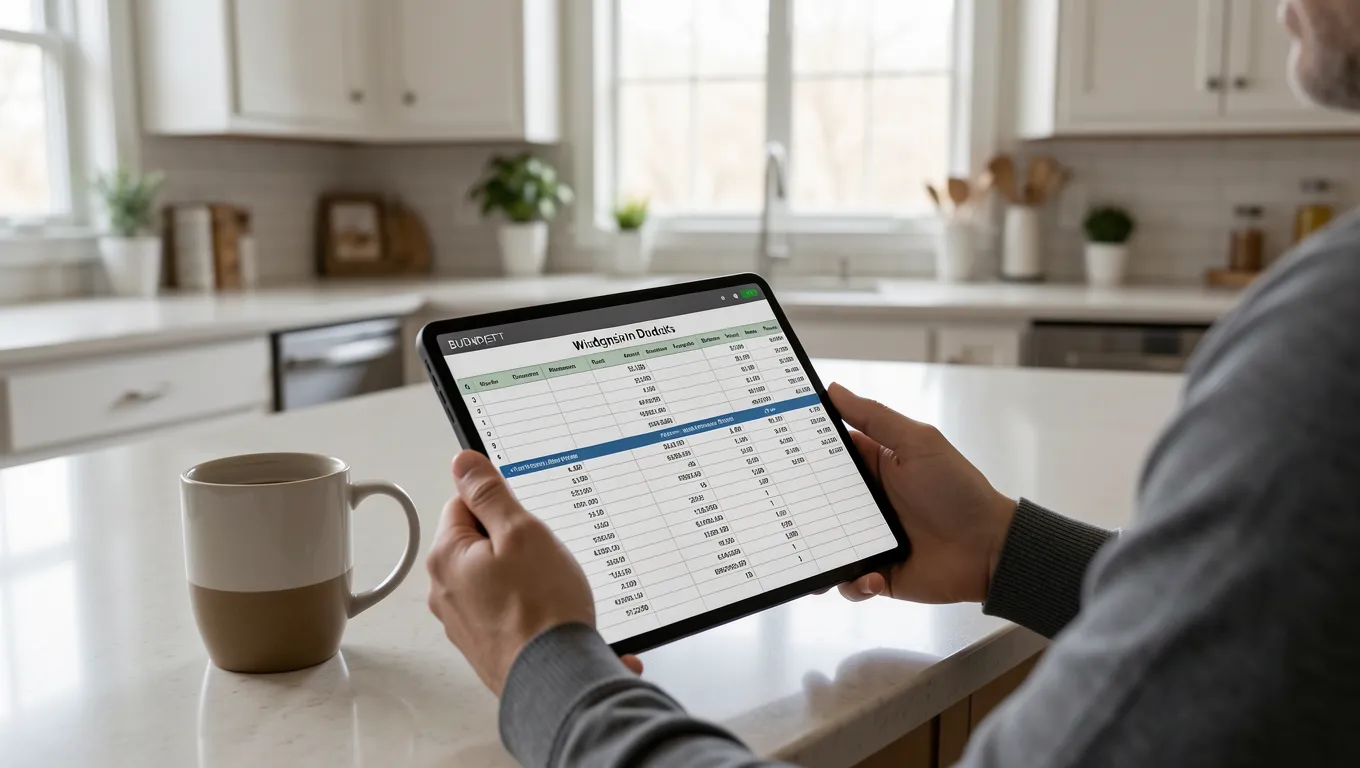
Inflation is a broad term, but for a Wisconsin resident, it often manifests in very specific ways: higher grocery bills at the local market and increased fuel costs for commuting. While lenders primarily focus on your official debt obligations (like car loans or student loans), they are increasingly aware of the broader economic climate. If you are applying for a loan to cover an emergency expense, a lender may look at your overall financial stability through the lens of regional inflation trends.
Let's look at some actual math to see how this plays out in real life. Suppose you are looking to take out a $10,000 personal loan for home repairs. At a 12% APR over a 36-month term, your monthly payment would be approximately $332. If your grocery and gas expenses have increased by $200 per month due to inflation, you are effectively 'losing' $2400 of borrowing capacity every year compared to last year. This doesn't change your DTI on paper, but it changes the reality of your ability to make those payments without struggle.
Another example: A borrower seeking a $15,000 loan at 15% APR over 48 months would face a monthly payment of roughly $413. If you are living in an area where the cost of utilities has spiked due to extreme Wisconsin winters, that $413 becomes much harder to absorb than it would have been two years ago.
When you are navigating the economic uncertainty of 2026, choosing between a fixed-rate and a variable-rate personal loan is one of your most critical decisions. Both have their place, but they behave very differently when the cost of living begins to fluctuate. Understanding this trade-off can save you thousands of dollars over the life of a loan.
A fixed-rate loan provides the security of knowing exactly what your payment will be every single month. This is highly beneficial in Wisconsin, where seasonal spikes in other expenses (like heating) might make budgeting difficult. You know that no matter how high inflation goes, your loan payment stays the same. The trade-off? Fixed rates often come with a slightly higher initial APR compared to variable options.
On the other hand, a variable-rate loan may offer lower starting interest rates, but it carries the risk of increasing if market conditions change. In an inflationary environment where the Federal Reserve might adjust rates to combat rising costs, your monthly payment could climb unexpectedly. For example, if you have a $20,000 variable-rate loan and the interest rate jumps from 8% to 11%, your monthly obligation increases significantly. Most experts suggest that if you are on a tight budget due to high living costs, the predictability of a fixed rate is often worth the slightly higher cost.
Not all parts of Wisconsin are created equal when it comes to borrowing power. There is a notable economic distinction between the high-cost metropolitan areas like Milwaukee and Madison versus more rural regions such as those in the Driftless Area or the northern counties. This disparity affects how lenders view your income and stability.
In urban centers, while salaries may be higher, the cost of living—specifically housing—is also significantly higher. A lender looking at a $60,000 salary in Milwaukee might see a much tighter budget than they would for a $50,000 salary in a rural town where rent is half the price. This means that even with the same gross income, your 'effective' borrowing power may be higher in a lower-cost region.
Furthermore, local employment trends play a role. If you live in an area heavily dependent on a single industry (such as manufacturing or specialized agriculture) and that industry is facing headwinds in 2026, lenders might view your income as less stable. This 'stability factor' can influence whether they approve the loan amount you are requesting or if they suggest a lower limit to mitigate their risk.
Before you start shopping for loans, you should perform a self-assessment to see where you stand in the current 2026 economy. This is not about getting an approval—as lenders make those decisions independently—but about knowing your own numbers so you aren't surprised by a rejection.
Follow this simple framework:
One mistake many Wisconsin borrowers make is failing to account for the 'seasonal swing' in their monthly budget. In our state, we know that January and February look very different from July when it comes to utility bills. If you take out a personal loan during a mild summer, your monthly cash flow might look much healthier than it actually is.
The major pitfall is underestimating how seasonal utility spikes can impact your ability to make loan payments during the winter months. A sudden jump in heating costs combined with a new loan payment can create a 'liquidity crunch.' To avoid this, you should aim to build an emergency fund that covers at least three months of expenses before taking on significant new debt.
Expert nuance: Some lenders may look at your bank statements rather than just a credit report. If they see large fluctuations in your ending monthly balance due to seasonal spending, it could potentially affect their perception of your financial stability. Being consistent with your savings and understanding the ebb and flow of your local cost of living is one of the best ways to prepare for any borrowing needs that may arise in 2026.