How Wisconsin's Property Tax Cycles Impact Your Monthly Debt-to-Income Ratio
MW
Margaret Wack
Personal Finance Writer · Updated October 2026

Margaret Wack
Personal Finance Writer · Updated October 2026
Imagine it is late October in a quiet Milwaukee suburb. You have just received your annual property tax statement, and the number at the bottom of the page is significantly higher than last year due to recent local school levies or municipal reassessments. For many Wisconsin homeowners, this moment represents more than just a temporary cash flow crunch; it represents a fundamental shift in their financial profile that could impact their ability to secure credit. In 2026, as economic conditions continue to fluctuate, understanding the intersection of seasonal tax obligations and your monthly debt-to-income (DTI) ratio is essential for anyone looking to take out a personal loan or refinance existing debt.
Many borrowers make the mistake of thinking their DTI only includes what they see on their monthly bank statement. However, lenders look at the 'real' cost of living, which in Wisconsin often involves lumpy, non-monthly payments like property taxes. If you are planning to apply for a loan later this year, failing to account for these seasonal spikes could lead to an unexpected rejection or a much higher interest rate than you anticipated. We want to help you navigate these complexities so you can make informed decisions about your debt.
In the current 2026 landscape, personal loan APRs for well-qualified borrowers may range from 7% to 36%, depending on credit scores and lender criteria. Furthermore, a typical household in Wisconsin might see their property tax obligation fluctuate by hundreds or even thousands of dollars annually based on local assessment cycles. By understanding how these variables feed into your DTI, you can better prepare for the 'what if' scenarios that lenders will undoubtedly scrutinize during the underwriting process.
Wisconsin operates on a unique property tax cycle that differs significantly from many other states. Unlike some regions where taxes are rolled into your monthly mortgage payment via an escrow account, many residents choose to pay their taxes directly to the county or municipality. This creates a 'lumpy' payment schedule—usually with major installments due in late fall and spring. For someone living on a strict monthly budget, these large, infrequent payments can feel like a sudden debt spike even if your underlying lifestyle hasn't changed.
Lenders, however, do not care about your cash flow volatility; they care about your mathematical obligation. When calculating your DTI, lenders look at your gross monthly income versus your total monthly debt obligations. If you are paying taxes directly, a lender may ask for proof of these payments or use an annualized average to determine how much of your income is 'spoken for' by housing costs. This is where the concept of 'effective DTI' becomes vital.
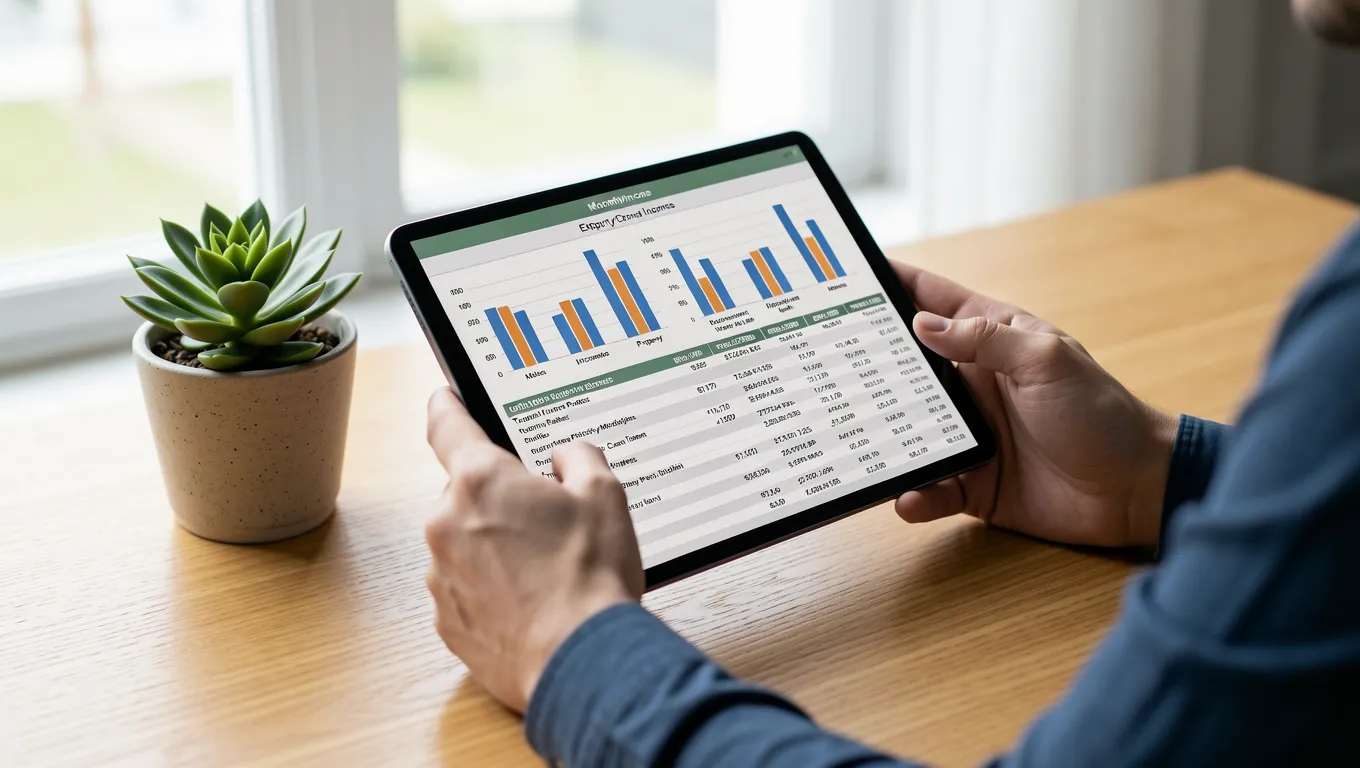
To understand how these taxes impact you, we need to look at the math. Your Debt-to-Income ratio is calculated by dividing your total monthly debt payments by your gross monthly income (before taxes). If a lender sees that your property tax bill has increased by $2,400 per year, they won't just see a one-time payment; they will likely factor in an additional $200 per month into your housing obligation.
Let us look at a worked example. Suppose you earn $5,000 gross per month ($60,000 annually). Currently, your monthly debts are: $1,200 for mortgage/rent and $300 for a car loan. Your current DTI is 30% ([$1,200 + $300] / $5,000). However, if your Wisconsin property taxes increase by $2,400 annually, and you pay them directly, the lender may add that $200 monthly average to your obligations. Your DTI effectively jumps from 30% to 34%. This might seem small, but it could be the difference between qualifying for a premium interest rate or being denied altogether.
Consider another scenario involving a personal loan. If you are seeking a $15,000 loan at 12% APR over 36 months, your monthly payment would be approximately $497. If that same tax increase has already pushed your DTI up by 4%, adding this new $497 payment could push your total DTI above the critical 40% or 43% threshold that many lenders use as a hard cutoff. Always calculate your 'future DTI' by adding potential new loan payments to your existing obligations, including those annualized tax amounts.
When managing property taxes in Wisconsin, you generally have two paths: paying the county directly or using an escrow account through your mortgage servicer. Each has significant implications for how a lender views your financial health and your DTI.
Strategy A is using an escrow account. The primary advantage here is predictability. Your monthly payment remains relatively stable, which makes it much easier to budget for other debts like personal loans. However, the trade-off is that if property taxes rise sharply—as they often do in growing Wisconsin districts—you may face a significant 'escrow shortage' next year. This requires a lump-sum payment or an increase in your monthly mortgage payment, both of which can suddenly impact your DTI.
Strategy B is paying the taxes directly. This gives you total control over when the money leaves your bank account, which can be helpful for maximizing interest earned in high-yield savings accounts. The downside? It creates 'lumpy' debt obligations that are harder to present cleanly to a lender during an application process. If you choose this route, we recommend keeping a dedicated tax reserve fund so you can demonstrate to a lender that you have the liquid assets to cover these spikes without increasing your monthly debt load.
| Feature | Escrow Account | Direct Payment |
| Predictability | High (mostly) | Low |
| Cash Flow Impact | Smooth/Consistent | Seasonal Spikes |
| DTI Presentation | Very Clear | Requires Averaging |
If you know a large tax bill is coming, you need a decision framework to decide if taking on additional debt—like a personal loan for home improvements or debt consolidation—is a wise move. Do not simply look at the monthly payment; look at your 'low-cash' months.
First, map out your annual tax due dates against your expected income fluctuations. Second, calculate your 'worst-case scenario' DTI. This is your total monthly debt (including the new loan) plus your average monthly property tax obligation, divided by your gross income. If this number exceeds 40%, you are entering a danger zone for most lenders.
To navigate this, follow these steps:
One of the most common mistakes Wisconsin residents make is using high-interest revolving credit to bridge the gap during tax season. When a large property tax bill arrives in November, it can be tempting to put it on a credit card if your cash flow is tight. Warning: Never use a credit card to cover one-time spikes like property taxes; this creates a revolving debt cycle that can cripple your DTI for years and significantly lower your credit score due to high utilization.
Instead, consider the long-term impact of your debt choices. If you are using a personal loan to consolidate other debts, ensure the new monthly payment is low enough that it doesn't push you over your limit when taxes rise. Many people find themselves in a 'pincer movement' where their credit card minimums increase because they used them for taxes, while simultaneously trying to pay off a new personal loan.
Expert nuance: In 2026, many lenders are looking more closely at 'residual income'—the money left over after all debts and taxes are paid. Even if your DTI is technically within limits, a low residual income caused by high property taxes might lead to a denial. Always prioritize building an emergency fund that covers at least three months of your total housing costs (including the highest possible tax scenario) before taking on new unsecured debt.
It is important to remember that your local Wisconsin property taxes do not exist in a vacuum. They are influenced by the broader economic environment, including decisions made by the Federal Reserve. While the Fed does not set your property tax rate, their influence on interest rates affects how much you pay for your mortgage, which in turn dictates whether you use an escrow account or direct payment.
When interest rates are high, many homeowners find themselves with less 'wiggle room' in their monthly budgets. This makes the impact of a local school levy or a municipal bond issuance feel even more significant. In 2026, as we navigate the aftermath of several years of economic shifts, staying aware of both your local assessment schedule and national interest rate trends is the only way to maintain true financial agility.
A knowledgeable borrower knows that their DTI is a moving target. A lender might see you as a low-risk candidate today, but if your property tax assessment jumps by 10% next month, your risk profile changes instantly. By proactively managing your taxes and understanding the math behind your debt, you can approach lenders like WiscLoans or other financial institutions with confidence in your ability to manage both seasonal obligations and new commitments.